


The Best Window Film for Arizona Heat
The best film for Arizona heat stops the heat at the glass in the look you love. Done right, the great room you avoid after 2 PM becomes the room everyone sits in again.
That film can be nearly clear or dark and reflective. Our clear films block up to 80% of the sun's infrared heat, the warmth you feel on your skin. Our darker reflective films reject up to 83% of the sun's total heat. Every solar film we install blocks up to 99% of UV. You'll feel it the first afternoon.
Licensed, Bonded and Insured · ROC 331089 · Official SunTek dealer
The Short Answer: The Look You Love, With the Heat Stopped at the Glass
There isn't one magic film for every Arizona home. There is a best film for the look you want, and that's how we'd choose yours.
In Tucson, a good heat film does three jobs at once. It stops the infrared heat you feel by a sunny window. It blocks up to 99% of UV, so floors and furniture keep their color. And it cuts the desert glare off the pool deck and the TV screen.
Light and dark films both do all three. So the real question is simple: how do you want the house to look? Bright, with the view untouched? Or shaded and private, with a reflective face from the street? Tell us, and we'll match one film to that look for the whole house.
Not sure yet? Request a free estimate and see both on your own glass.
What Arizona Sun Does Through Your Glass, and Why You Feel It
Sunlight through a window carries three things you care about.
Infrared. This is the heat you feel on your skin and on the sofa cushion by the slider. It's why one chair in the room is unbearable at 4 PM while the rest of the room is fine.
Visible light. Daylight and glare. It's what lets you see the Catalinas, and what washes out the TV.
Ultraviolet. You can't see it or feel it. But it's the main cause of fading in floors, rugs, cabinets and fabric.
Tucson gets this sun nearly every day of the year, and west and south windows take it the hardest. Glass alone doesn't stop the heat you feel or the glare. That's the job film was made for.
How to Read a Window Film Spec Sheet (Without the Jargon)
Every film comes with a row of numbers. Here's what the main ones mean, in plain words.
Total solar energy rejected (TSER). The share of the sun's total energy the film keeps out: light, infrared and UV together. Higher is cooler. It's the best single number for overall heat.
Infrared heat blocked. The share of the sun's infrared the film stops. This is the number that tracks what you feel in a sunny chair. Clear, spectrally selective films score high here without darkening the glass.
Visible light transmission (VLT). How much daylight comes through. Higher means lighter. It's about the look and brightness of the room, not protection. Does window tint make a house dark?
UV blocked. How much ultraviolet the film stops. It matters most for fading. Protect floors, furniture and art from fading
We install SunTek window film, and every number we quote comes from SunTek's published specifications. Those numbers are measured on single-pane clear glass, so every film compares fairly. On dual-pane or Low-E glass, real results vary with the glass, and we'll tell you what to expect on yours. Window film on dual-pane and Low-E windows
Rather skip the spec sheet? Call (520) 542-3002. We'll tell you what the numbers mean for your house.
Light or Dark: Either Way, You Beat the Heat
Want it light? Clear films keep your daylight and your view, and they're strong where it counts in Arizona. Ultra-VisionDS 40 blocks 80% of the sun's infrared heat, so the hot spot by the window goes away. Every Ultra-VisionDS shade blocks more than 97% of UV. From the street, the house looks the way it does today. Clear window film
Want it dark? Darker and reflective films give you the most privacy, the most glare control and our strongest heat rejection. DR Mirror 7 rejects 83% of the sun's total heat. Dual-reflective films add daytime privacy and keep the inside of the house calm and easy on the eyes. Dual reflective film One-way mirror film
You never have to go darker than you like to get real heat relief. Here's what we'd do on your house. If the view is why you bought it, go light. If privacy and the very hottest afternoons matter more, go reflective. Both are good choices.
Still torn? That's what the free estimate is for. You'll see both before you decide.


Looking for Ceramic Window Tint for Your Home? Here's What You're Really After
Most people who ask for ceramic want the same thing: a clear film that blocks heat without darkening the house. That's what our Ultra-VisionDS film does. It's barely visible on the glass and still blocks up to 80% of the sun's infrared heat.
It's the film we'd show first to anyone who wants a cooler house that still looks bright and open. You'll see it on your own windows at the estimate, next to a darker option, so you can compare the two in real Tucson light.
Tucson Home Window Tint has tinted thousands of Tucson homes since 2020, and we've had this conversation in a lot of living rooms. Homes and businesses are all we do. Clear window film
What About the West-Facing Windows? They Get the Same Protection
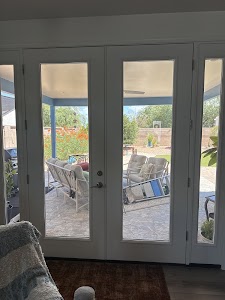
West windows take the sun when it's lowest and hottest, from mid-afternoon to sunset. An eave can't block it. That's when the great room turns into the room nobody wants to sit in.
The answer isn't a different film on the west side. You pick one look for the whole house, and we match one film to it. Then we show you how that film performs on your sunniest windows before you decide. Every window looks clean and even from the street, and the west rooms get the same strong protection as the rest.
Light look on the west windows. Ultra-VisionDS 40 blocks 80% of the sun's infrared and keeps the sunset in full view. The burn goes out of the afternoon.
Reflective look on the west windows. Dual-reflective and mirrored films give the top heat numbers and the strongest glare control, with daytime privacy as a bonus.
We also check the glass on every window. Big west-facing panes and shade from a patio cover both matter when we match a film to your glass.

Tell us which room bakes after 2 PM. We'll come out and show you what fixes it, free.
Does Window Film Lower Cooling Costs? Yes, Here's How
Yes. When less of the sun's heat comes through the glass, your A/C has less to fight, especially in rooms that take the long afternoon sun. That means lower cooling costs.
How much you save depends on your house: which way the windows face, how much glass there is, the shade around it and how you run the A/C. We'd rather put the right film on your glass than promise a number. A whole-house install gives you the most comfort and the biggest cooling savings over the long run.
Comfort is the part you'll notice first. Rooms that were too hot to use in the afternoon become rooms you live in again. Residential window tint
Running a business with hot offices or a west-facing storefront? The same films work on commercial glass, and we schedule installs around your business hours, including after close. Commercial window tint
Cost, Warranty and Install Day: What You Can Count On
Cost. Most homes start around $14 a square foot installed. Your price depends on the film, your glass, the window sizes and heights and how many windows you tint. Home window tint cost
Warranty. Home installs carry our lifetime warranty on materials and labor, against bubbling, peeling, fading and discoloring. That covers light and dark films alike. Commercial installs carry 10 years. If something isn't right, we come back and make it right. Warranty details
Install day. Our installers are background-checked professionals, each with at least five years of hands-on window film experience. No trainees learning on your windows. They lay down drop cloths, move furniture and blinds with care and clean every pane before the film goes on. Most jobs are completed in a day or less.
See Both Looks on Your Own Windows, Free
- Call or request a free estimate. We're open 7 days a week, 8 AM to 6 PM.
- Show us the hot rooms. And tell us what time of day they're worst.
- We measure every window and check the glass. That tells us which films are a safe match.
- You see light and dark samples on your own glass. In real Tucson sun, from inside and from the street.
- You get a quote on the spot. No pressure. Like it? Pick your install date before we leave. We take 10% off for military and first responders.
Questions About Window Film and Arizona Heat
What's the best window film for Arizona heat?
The best film is the one that gives you the most heat rejection in the look you want. Our darker reflective films reject up to 83% of the sun's total heat with DR Mirror 7. Our clear films block up to 80% of the sun's infrared heat with Ultra-VisionDS 40 and keep the view.
Do I need dark film to block Arizona heat?
No. Clear films block most of the infrared heat you feel, up to 99% of UV and a good share of glare. Darker and reflective films add privacy and our top total heat numbers. Both are good choices.
Is clear film the same as ceramic window tint for a home?
Many people ask for ceramic film when what they want is a clear film that blocks heat. That's exactly what Ultra-VisionDS is designed to do. We'll show you how it looks on your glass at the estimate.
Should I put a darker film on my west windows?
We recommend one film for the whole house. It keeps every window looking clean and even from the street. Pick the look you like, and we'll show you how it performs on your sunniest windows.
What does TSER mean?
Total solar energy rejected. It's the share of the sun's total energy, light, infrared and UV together, that the film keeps out. Higher is cooler.
What's the difference between infrared and total heat?
Infrared is the heat you feel on your skin by a sunny window. Total heat adds visible light and UV. Clear films score high on infrared, and reflective films score highest on total heat.
Does window film lower cooling costs?
Yes. Film cuts the heat that comes through the glass, so the A/C works less, especially in rooms with afternoon sun. How much you save depends on your windows, their direction and how you run your A/C.
How much does heat-blocking window film cost?
Most homes start around $14 a square foot installed. Your price depends on the film, your glass, the window sizes and how many you tint. You get a clear quote on the spot at the free estimate.
Can heat-blocking film go on dual-pane windows?
In most cases, yes. We check every window at the estimate, and we only use films that are a safe match for your glass.
Who installs heat-blocking window film in Tucson?
Tucson Home Window Tint does. We're an official SunTek dealer, homes and businesses are all we do, and home installs carry our lifetime warranty on materials and labor.
What Tucson Homeowners Say












Get Your Afternoons Back
Request a free estimate. We'll put light and dark samples on your hottest windows and give you a quote on the spot. No pressure.
- Tucson Home Window Tint
- 470 W Roger Rd Ste 110, Tucson, AZ 85705
- (520) 542-3002
- sales@tucsonhomewindowtint.com
- Open 7 days, 8 AM–6 PM
- Licensed, Bonded and Insured · ROC 331089
Visit or Call Us
Tucson Home Window Tint 470 W Roger Rd Ste 110Tucson, AZ 85705 (520) 542-3002 sales@tucsonhomewindowtint.com Open 7 days, 8 AM–6 PM